Piano lessons for seniors in New Jersey: how to start at any age
What the research really says about learning piano after 60, what happens at a first lesson, how to choose a teacher and a keyboard, and where to find low-cost music classes around New Jersey.
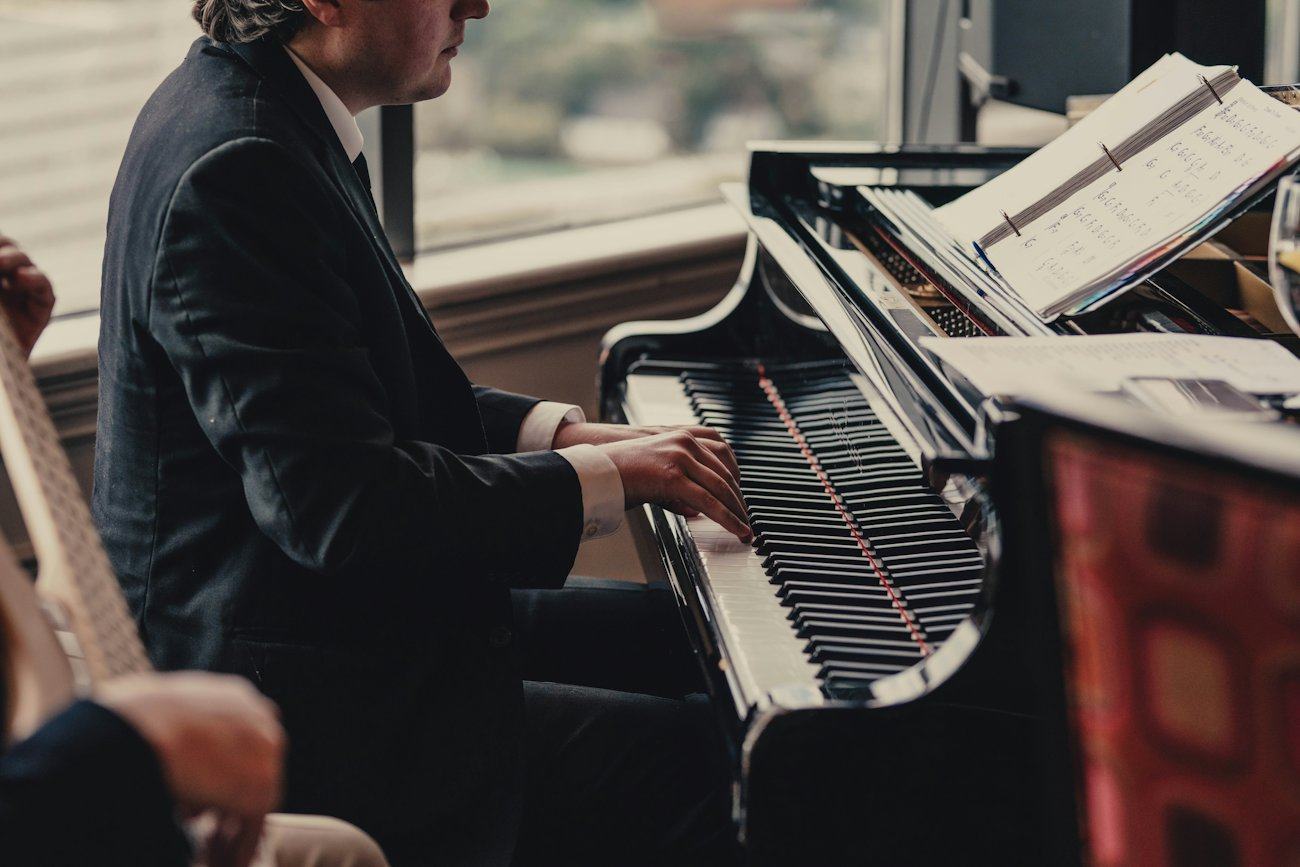
Plenty of people in their sixties, seventies and eighties sit down at a piano for the first time. Some took lessons as children and quit. Others always wanted to and never had the time.
Adult beginners have real advantages. You understand rhythm from a lifetime of listening, you can read instructions, and you usually practice because you want to. This guide covers what the research says, what a first lesson looks like, how to pick a teacher and an instrument, and where older adults in New Jersey can learn without spending much.
Is it too late to learn piano after 60?
No. And there is careful research on what happens when older adults try.
Jennifer Bugos, a music education researcher at the University of South Florida, has led several studies of piano training in later life. In one randomized controlled trial, published in the Journals of Gerontology and described by the National Endowment for the Arts, 155 adults aged roughly 60 to 80 were placed in one of three groups for 16 weeks: group piano lessons, computer-based brain training, or a waiting list. Both active groups improved more than the waiting list on working memory and processing speed. Only the piano group made significant gains in verbal fluency, especially the kind that requires switching between categories.
In an earlier study in Frontiers in Integrative Neuroscience (2019), Bugos compared 16 weeks of group piano, a percussion ensemble and music listening in adults aged 60 to 80, with 135 finishing the study. The piano students had a 45-minute class each week and were asked to practice 30 minutes a day. The piano group improved most at coordinating both hands. The piano and percussion groups both did better than the listening group on a visual scanning and working memory test, though the effect was small.
A third study, run in Germany and Switzerland and published in Frontiers in Neuroscience in 2021, gave 156 healthy older adults six months of either piano lessons or a music listening and music culture course. Both groups got better at understanding speech in background noise when listening with both ears. The piano group showed some extra gains in certain listening conditions.
Keep this in proportion. These studies were small and short, and none of them shows that piano prevents dementia. The National Institute on Aging says mentally stimulating activities may help memory and lists learning or relearning an instrument as one good choice. The best reason to start is simpler: it is satisfying to play a song you love with your own hands.
What happens at a first lesson?
A good first lesson is relaxed. Most teachers start with a conversation. Expect questions like these:
- Have you played before, even as a child?
- What music do you love? Hymns, show tunes, jazz standards, classical, the Beatles?
- Do you want to read music, play by ear, or both?
- How much time can you practice in a typical week?
- Do you have any trouble with your hands, back, eyesight or hearing?
Then you will usually find middle C and play a few notes with each hand. Many teachers send you home with one short piece and a simple daily exercise. Bring reading glasses if you use them, and a notebook. You will not be asked to perform, and nobody expects you to be good yet.
Pick one familiar song you would like to play by the holidays or a family birthday. A concrete goal gives every practice session a purpose, and your teacher can build lessons around it.
Private lessons at home or a group class: which suits you?
Both work. The right choice depends on how you like to learn and how easily you can get out.
Private lessons
One teacher, one student, your pace. The lesson bends around your interests and any physical limits. If the teacher comes to your home, you learn on the instrument you practice on, with no driving at night or hunting for parking. Private lessons cost more per hour than a class, and you have to be comfortable letting someone into your home.
Group classes
Group piano is usually taught on a row of digital keyboards with headphones, so everyone can practice at once. It is often cheaper, and it comes with built-in company. The piano classes in the Bugos studies were group classes. The trade-off is less individual attention and a set pace.
If you cannot decide, start with a short group course, then switch to private lessons if you want to go further.
How do I find a good piano teacher?
Ask around first. Senior center staff, church music directors, librarians and friends who play often know teachers who enjoy working with adults. Then call two or three and ask:
- Do you teach adult beginners now? Teaching a seven-year-old is different from teaching a retired engineer.
- How long are lessons, and how often? Ask which lengths are offered. Half an hour can feel rushed for adults who like to ask questions, and an hour can tire stiff hands. In Bugos's 2019 study, classes ran 45 minutes a week.
- What method or books do you use? Ask whether you can learn songs you know, not only exercises.
- What does it cost, and what is the cancellation policy? Rates vary a great deal around New Jersey. Get the price and rules in writing.
- Can I try one lesson before paying for a package? A good teacher will say yes.
- For home lessons: ask for references, and ask whether the teacher has had a background check.
Trust your gut after the first lesson. You should leave feeling encouraged.
Should I buy a piano or a keyboard?
You do not need a grand piano to begin. If there is already an acoustic piano in the house, have it tuned and use it. If not, a digital piano or keyboard is a sensible start for most older adults.
| What to look for | Why it matters |
|---|---|
| Full-size keys | Your fingers learn the right spacing from day one. |
| Weighted or touch-sensitive keys | Notes get louder when you press harder, as on a real piano. |
| Volume knob and headphone jack | You control loudness and can practice without an audience. |
| A sturdy stand and adjustable bench | Good posture protects your back, shoulders and wrists. |
| A sustain pedal | Most beginner music uses one sooner or later. |
Ask your teacher before you buy. Avoid paying for a long rental or an expensive package until you know you will stick with it.
Keyboard and stand height matter more than brand. Sit so your forearms are level with the keys and your feet rest flat on the floor or a footrest.
What if I have arthritis or hearing loss?
Arthritis and stiff hands
Arthritis does not have to keep you away from the keys, but it does change how you practice. Talk with your doctor or a hand therapist if you have active pain. Then try these habits:
- Warm your hands first, with warm water or by rubbing them together. The National Council on Aging lists warm water soaks and heat among ways to ease hand pain.
- Practice in short sessions, such as two 10-minute stretches instead of one long one, and rest before your hands get tired.
- Keep your wrists level and your fingers curved and loose. Do not press harder than the key needs.
- Ask your teacher to pick pieces with smaller hand stretches. A keyboard with a lighter touch may be kinder than a heavy acoustic action.
- Stop if something hurts. Sharp pain is a signal to change what you are doing.
Hearing loss
Hearing loss does not rule out piano. A digital keyboard lets you set the volume where you can hear clearly, and headphones can help some players. If you wear hearing aids, wear them to lessons and tell the teacher. Ask your audiologist whether your aids can be adjusted to make music sound more natural.
Protect the hearing you have. The National Institute on Deafness and Other Communication Disorders advises musicians to rest their ears with breaks during practice and to remember that any instrument can harm hearing if it is loud enough for long enough. If you need help paying for hearing aids, see our guide to hearing aids for older adults in New Jersey.
What do North Jersey piano teachers and families say?
In October 2026 we talked with more than 30 private instructors and about 50 older adults, adult children, care managers and home care professionals around North Jersey. Here is what came up most often about music lessons.
- Price. Private piano teachers we spoke with charge about $45 to $68 for a 30 to 45 minute lesson and about $90 for a full hour at home. Some add a little if the drive is longer than 15 to 20 minutes.
- Mornings are easier to book. Many teachers spend afternoons with children after school, so a weekday morning slot is often wide open.
- Piano beats guitar for most new players. Teachers told us guitar strings can be hard on older hands, while piano keys are gentler.
- Plan for the first three months. Teachers said adults who start later sometimes drift off after a few months. A goal, like one song for a grandchild's birthday, keeps lessons going.
- The same time every week helps. Families said a standing lesson gives the week something to look forward to.
Trust came up in almost every conversation we had. Ask about a background check, insurance and a reference, have family there for the first visit, and pay per session. Our guide to vetting someone who comes into the home walks through each step.
Where can I find low-cost music lessons in New Jersey?
County colleges
Community colleges are often the cheapest classroom option. Atlantic Cape Community College lists piano among its personal enrichment classes. Camden County College offers noncredit courses each semester in areas that include music, plus senior programs. Check your own county college's continuing education catalog, since offerings change every term.
New Jersey public colleges can also waive tuition for residents 65 and older in credit courses when seats are open, under N.J.S.A. 18A:62-3. Fees still apply. A beginning piano or music course taken this way can be a bargain. Call the registrar or student accounts office to ask how it works there. Our guide to free and discounted things to do explains more.
Rutgers programs
Rutgers Community Arts, part of the Mason Gross School of the Arts in New Brunswick, offers noncredit music, dance and visual arts programs for children, teens and adults, online and in person. Call 848-932-1500 to ask what is open to adult beginners this season.
OLLI-RU, the Osher Lifelong Learning Institute at Rutgers, serves adults 50 and older with noncredit courses and no tests or grades. In-person classes meet at the Rutgers Lifelong Learning Center, 3 Rutgers Plaza, New Brunswick, and many classes run on Zoom. Membership is optional and costs $50 a year for member course rates. Check the seasonal catalog for music courses at olliru.rutgers.edu or call 848-932-6554.
Senior centers and libraries
Senior centers are worth a call. Bergen County alone runs 10 county senior centers, and the Division of Senior Services is at 201-336-7400. Ask whether a keyboard class, chorus or music group meets, or whether a center has a piano members can use. Elsewhere, call the Aging and Disability Resource Connection at 1-877-222-3737 to reach your county office on aging.
Libraries often host concerts and music programs, and some offer online learning services with a library card. Ask a librarian what your card includes.
Free online classes
New Jersey's Division of Aging Services points older adults to GetSetUp, which offers free virtual classes taught by older adults. Topics include music, along with cooking, fitness and technology. Start at getsetup.io/partner/NJ.
- Choose your goal. One song, reading music, or playing with grandchildren.
- Pick a format. A county college class, a senior center group or a private teacher.
- Book one trial lesson. Ask the questions above before you commit.
- Set up a practice spot. Good light, the right bench height and a place for your music.
- Practice a little most days. Ten or fifteen minutes beats one long weekend session.
If getting to a class is the hard part, our guide to activities for homebound older adults has more ideas. For more ways to keep learning, read learn something new after 60, and if painting appeals too, see our guide to art classes for older adults in New Jersey.
Common questions
Am I too old to learn piano at 70 or 80?
No. Studies of piano training have enrolled adults up to age 80, and many people start even later. Progress may be slower than for a child, but adults often practice more steadily and understand music better from years of listening.
How long should a piano lesson be for an older adult?
Ask what the teacher offers. Many adults find 45 minutes a comfortable middle ground, which is also the weekly class length in one of the Bugos piano studies. If your hands tire quickly, a shorter lesson with more practice at home may suit you better.
Do I need to buy a piano before my first lesson?
No. Many teachers are happy to give a first lesson before you buy anything. If you continue, a digital piano with full-size, touch-sensitive keys and a volume control is a practical choice for most beginners.
Can I take piano with arthritis?
Usually yes. Warm your hands first, practice in short sessions, rest before your hands get tired and ask your teacher for pieces with smaller stretches. Check with your doctor or a hand therapist if you have active pain.
Are there free or cheap piano classes for seniors in NJ?
Look at county college continuing education (Atlantic Cape lists piano), the senior tuition waiver at public colleges for residents 65 and older, senior centers and free GetSetUp online classes. Call the ADRC at 1-877-222-3737 to reach your county office on aging.
How can I help my mom or dad start piano lessons?
Start by asking which music they love, then find a teacher who has taught adults and can come at the same time each week. Many families book and pay for the first month as a gift, then let their parent take it from there. Sit in on the first lesson if you can.
- National Endowment for the Arts: Quick Study on piano training and cognition (Bugos and Wang)
- Bugos JA (2019), The effects of bimanual coordination in music interventions on executive functions in aging adults, Frontiers in Integrative Neuroscience
- Bugos and Wang (2022), Piano training enhances executive functions and psychosocial outcomes in aging, Journals of Gerontology
- Worschech et al. (2021), Improved speech in noise perception in the elderly after 6 months of musical instruction, Frontiers in Neuroscience
- National Institute on Aging: Participating in activities you enjoy as you age
- NCOA: Top tips for older adults managing arthritis hand pain
- NIDCD Noisy Planet: Protect your hearing when you play a musical instrument
- Atlantic Cape Community College: Personal enrichment
- Camden County College: Personal and professional development
- William Paterson University: Senior Citizen Waiver
- Mason Gross School of the Arts: Rutgers Community Arts
- Rutgers: Year-round arts programs at Rutgers Community Arts
- OLLI-RU: Home and membership
- OLLI-RU: Contact us
- Bergen County Division of Senior Services: Senior activity centers
- NJ 211: Nutrition programs for senior citizens (ADRC number)
- NJ Department of Human Services: GetSetUp flyer
- Seniors of NJ interviews with North Jersey instructors, families and care professionals, October 2026
This guide is for general information. Program rules and income limits change, so confirm with the official source before you apply.