Chair yoga for seniors in New Jersey: benefits, safety and classes
What chair yoga is, what the research says, who should check with a doctor first, a gentle routine to try at home, and where to find classes across New Jersey.
Chair yoga gives you the stretching, breathing and balance work of yoga without getting down on the floor, and without worrying about how you will get back up.
This guide explains what chair yoga is, what the research says, who should check with a doctor first and how to try a gentle routine at home. It also lists real places in New Jersey to find a class, many of them free or close to it.
What is chair yoga?
Chair yoga is regular yoga adapted so you can do most of it seated in a sturdy chair. Some poses are done standing, with one hand on the chair back for support. A class usually mixes three things: gentle movement for the neck, shoulders, spine, hips and ankles; slow breathing; and a few quiet minutes of relaxation at the end.
The National Center for Complementary and Integrative Health (NCCIH), part of the National Institutes of Health, describes yoga as practiced in the United States as physical postures, breathing techniques and meditation. Chair yoga keeps all three. It just moves them off the mat.
It suits a lot of people. Those with stiff knees or hips. People recovering from an illness. Anyone who feels unsteady standing for long. People who used to do yoga and want to keep going. Many classes welcome people who use a walker or a wheelchair, though you should ask first.
What are the benefits, according to the research?
Research on yoga is still growing, and studies use many different styles. Here is what the federal health agencies say, in plain terms.
- Balance. NCCIH reports that 11 of 15 studies in a 2014 review found improvement in at least one measure of balance, and that newer studies support a benefit for older adults living in the community.
- Sleep and stress. NCCIH says yoga has been shown to help sleep in several studies, including studies of older adults. Reviews also found benefits for stress and general mental well being.
- Pain. Yoga may ease neck pain and the pain of knee osteoarthritis, and may help low back pain a little. NCCIH calls the evidence for knee and neck promising but limited.
- Mood. Yoga may help people manage symptoms of anxiety or depression.
The National Institute on Aging (NIA) lists yoga as a balance exercise and says activities like yoga count as a mix of exercise types. NIA recommends about three sessions of balance exercise a week for older adults. A chair yoga class two or three times a week can cover much of that.
Keep the claims modest. Chair yoga will not replace walking or strength training, and it will not cure arthritis. It is a gentle, social way to move more, and moving more is what the research keeps rewarding.
Is chair yoga safe for me, and when should I ask a doctor first?
For most people, yes. NCCIH says yoga is generally safe for healthy people when done properly with a qualified instructor. It also gives older adults a specific caution: emergency room visits for yoga injuries are more common in people 65 and older than in younger adults. Most injuries are sprains and strains, often in the knee or lower leg.
NCCIH advises older adults and people with health conditions to talk with their health care provider and the instructor about their needs. It lists these among the conditions that may call for changes:
- An earlier injury, such as a knee or hip injury
- Lumbar spine disease
- Severe high blood pressure
- Balance problems
- Glaucoma
If you have osteoporosis, a joint replacement or a recent fall, ask your doctor which bends, twists and standing poses are safe for you.
Beginners should skip extreme poses such as headstands, shoulder stands and forceful breathing, and avoid hot yoga. Do not use yoga to put off seeing a doctor about a new symptom. Stop and get help if you feel chest pain or pressure, dizziness or nausea. NIA lists those as warning signs during aerobic exercise.
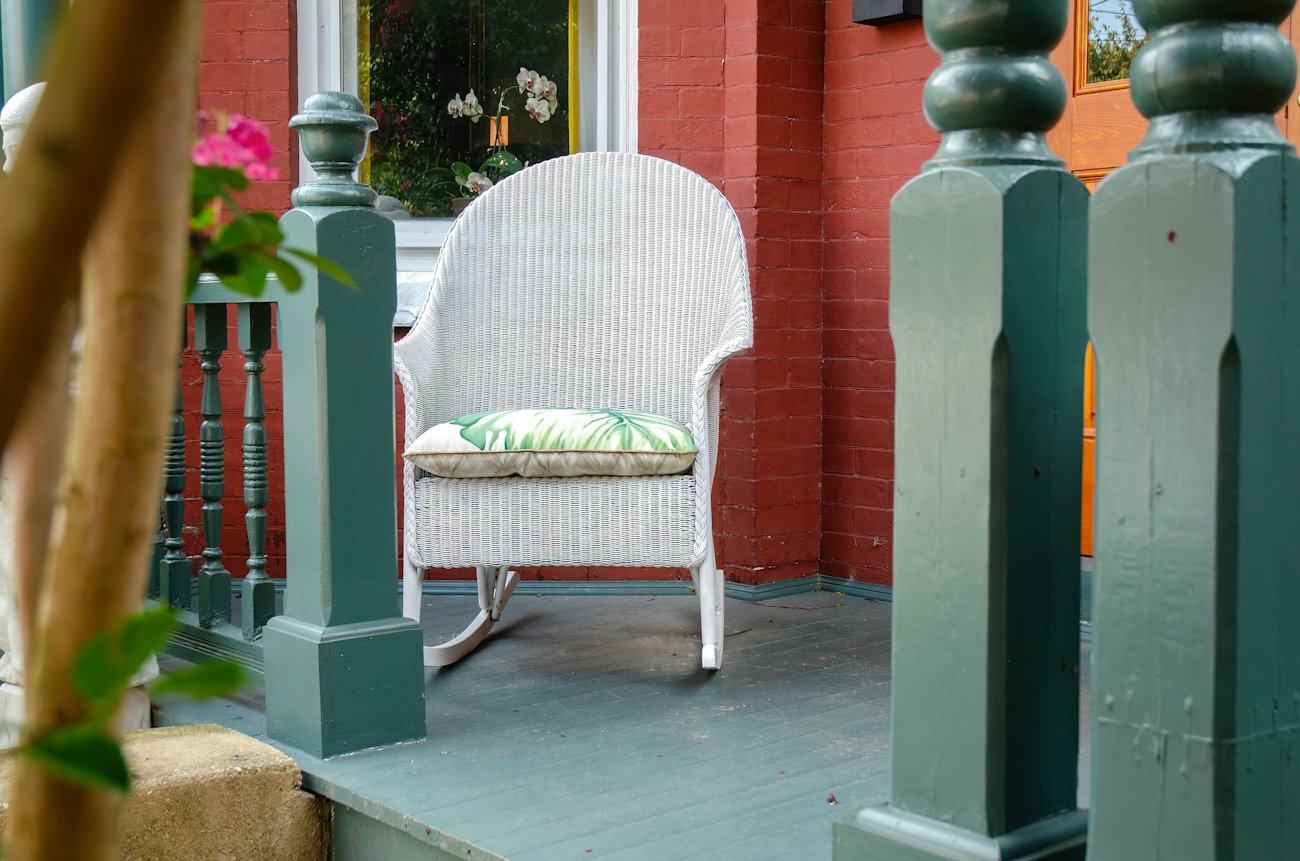
Use a sturdy chair without wheels or arms, set against a wall or on a nonslip rug. Your feet should rest flat on the floor. If they do not reach, put a firm cushion or a thick book under them.
What does a gentle routine look like?
Here is a simple sequence you can try at home in about 15 minutes. Move slowly and never push into pain. Breathe through your nose if that is comfortable, and keep breathing the whole time.
- Settle in. Sit toward the front of the chair, feet flat and hip width apart, hands on your thighs. Take five slow breaths, letting the exhale run a little longer than the inhale.
- Neck and shoulders. Lower your right ear toward your right shoulder, hold for three breaths, then switch sides. Roll your shoulders back in slow circles five times.
- Seated reach. Breathe in and raise both arms as high as is comfortable. Breathe out and lower them. Repeat five times. If your shoulders are stiff, raise your arms only to shoulder height.
- Cat and cow. With hands on your knees, breathe in and gently lift your chest. Breathe out and round your back, letting your chin drop. Repeat five times.
- Gentle twist. Sit tall. Place your left hand on your right knee and your right hand on the seat behind you. Turn slowly to the right and hold for three breaths. Return to center and switch sides. Keep the twist small if you have osteoporosis or back trouble.
- Ankles and feet. Lift one foot slightly and circle the ankle five times each way. Then press the heel down and lift the toes, back and forth. Switch feet.
- Standing balance, optional. Stand behind the chair with both hands on its back. Rise slowly onto your toes, then lower. Try ten times. If that feels steady, try lifting one foot an inch off the floor for a few seconds while holding on.
- Rest. Sit back, close your eyes if you like, and breathe quietly for two minutes.
NIA also posts free exercise videos, and GetSetUp, the online class site New Jersey offers free to older residents, lists seated fitness classes alongside its technology courses. A live teacher is still the best way to learn good form, especially for the first few weeks.
Should I do it at home or take a class?
Both have a place. NCCIH notes that learning yoga on your own, without supervision, has been linked to more injuries. A class gives you a teacher who can correct your posture and adapt poses to your body. It also gives you a reason to get dressed and see people, which matters a lot on a gray February morning.
Home practice works best once you know the basics. Many people take a weekly class and repeat a short routine at home on two other days.
| Option | Good for | Keep in mind |
|---|---|---|
| Senior center or county class | Low cost, social, a teacher who knows older bodies | Schedules change by season. Some fill up. |
| Public library class | Free or low cost, close to home | Often runs as a series with registration |
| Live online class | Bad weather, no ride, caring for a spouse | The teacher cannot see you as well. Keep the chair against a wall. |
| Video at home | Practice between classes | Best after you have learned the moves in person |
| Private teacher at home | Limited mobility, specific health needs | Costs more. Ask about training and insurance. |
When you check out a teacher, ask how long they have taught older adults and what training they have. NCCIH suggests asking about an instructor's training and experience before you start.
What do North Jersey yoga teachers and families say?
In October 2026 we talked with more than 30 private instructors and about 50 older adults, adult children, care managers and home care professionals around North Jersey. Here is what came up most often about yoga.
- Price. Private yoga teachers we spoke with charge from about $60 to $150 an hour at home. Some charge the same for two people, so a couple or two friends can share a session.
- Ask about experience with older students. Teachers told us some instructors are much better than others at modifying poses for aging bodies. Ask how they adapt for balance, joints and breathing.
- Most bring what you need. Teachers usually bring an extra mat or two for a home session, and a sturdy chair is all you need for chair yoga.
- Insurance is a fair question. Most yoga teachers carry their own liability insurance. One care manager told us she feels better recommending someone who does.
Trust came up in almost every conversation we had. Ask about a background check, insurance and a reference, have family there for the first visit, and pay per session. Our guide to vetting someone who comes into the home walks through each step.
Where can I find chair yoga in New Jersey?
County senior centers and offices on aging
Your county office on aging is the best first call. It knows which senior centers, town recreation departments and community groups run chair yoga near you. Reach it through the Aging and Disability Resource Connection (ADRC) at 1-877-222-3737, or dial 2-1-1 for NJ 211.
As one example, Somerset County's Senior Wellness Centers listed several chair yoga classes in their winter 2026 schedules. They included a video led class on Monday mornings and an eight week series with an instructor that cost $40. Call the Somerset County Office on Aging and Disability Services at 908-704-6346 for current classes. Most counties have something similar, so ask.
Public libraries
Many New Jersey libraries host chair yoga. The Newark Public Library, for example, began a weekly chair yoga class on Tuesday mornings this fall in the Main Library auditorium, aimed at older adults and people with limited mobility. The library supplies chairs, and registration is encouraged. Check your own library's events calendar, or ask at the desk.
State supported programs
New Jersey's Division of Aging Services supports several proven exercise programs run through county partners. None is called chair yoga, but two are close cousins:
- Move Today is a 30 to 45 minute class for flexibility, balance and stamina. You can do the exercises sitting or standing, with stretch bands. Trained peer leaders run it weekly or every other week for 12 sessions, with a strong focus on posture and preventing falls.
- A Matter of Balance runs for eight two-hour sessions and helps people who worry about falling. It is for adults 60 and older who are mobile, and it is offered in selected counties.
The Division of Aging Services lists 609-438-4797 for help finding these classes. Our fall prevention guide covers both in more detail.
YMCAs and community centers
Many YMCAs and town recreation centers in New Jersey run gentle yoga and chair based fitness classes for older adults. Some Medicare Advantage plans include a fitness benefit that covers a basic membership at participating locations. Original Medicare does not cover gym memberships or fitness programs, so call your plan to check. Our guide to exercise at home explains these benefits.
Online, free for New Jerseyans
The state's partnership with GetSetUp offers free live online classes for New Jersey residents 60 and older, including seated fitness and breathing sessions. If you need help getting online, see our guide to tech help in New Jersey.
How do I get started this week?
- Tell your doctor. Mention it at your next visit, or call first if you have any condition on the list above.
- Make one call. Ring the ADRC or your library and ask, "Where is the nearest chair yoga class for older adults?"
- Go twice before you judge. The first class always feels awkward.
- Add ten minutes at home. Repeat a few moves you learned on two other days.
Chair yoga pairs well with walking and simple strength work. For a full weekly plan, read our guide to exercising at home, and for more on staying well, see healthy aging in New Jersey. If getting out is hard, our list of activities for older adults who can't easily leave home has more ideas.
Common questions
Is chair yoga real exercise?
Yes. It works flexibility and balance, and some poses build strength. The National Institute on Aging lists yoga as a balance exercise. It does not replace walking or strength training, so pair it with other activity.
Do I need a doctor's permission for chair yoga?
Most people can start without one, but NCCIH advises older adults and people with health conditions to talk with their provider first. Check in if you have had a joint replacement, back problems, severe high blood pressure, glaucoma, osteoporosis, balance problems or a recent fall.
Can I do chair yoga if I use a walker or wheelchair?
Often yes, since most of it is done seated. Ask the instructor before your first class so they can adapt the poses for you.
How much does a chair yoga class cost in New Jersey?
Many library and senior center classes are free or low cost. For example, a Somerset County Senior Wellness Center series in winter 2026 cost $40 for eight weeks. Prices vary, so ask when you register.
Where can I find a class near me?
Call the Aging and Disability Resource Connection at 1-877-222-3737 to reach your county office on aging, check your public library's events calendar, or ask your town recreation department or local YMCA.
How much does private chair yoga at home cost in New Jersey?
Teachers we spoke with in North Jersey charge about $60 to $150 an hour for a private session at home, and some charge the same for two people. Free and low-cost group classes are also offered at many senior centers and libraries.
- NCCIH: Yoga, effectiveness and safety
- National Institute on Aging: Three types of exercise
- National Institute on Aging: Health benefits of exercise and physical activity
- NJ Division of Aging Services: Wellness programs
- NJ Division of Aging Services: Move Today
- NJ Division of Aging Services: A Matter of Balance
- NJ Division of Aging Services: 2026 Program Guide
- Somerset County: Senior Wellness Centers winter 2026 programs
- Somerset County: Senior Wellness Centers program announcements (February 2026)
- Newark Public Library: Chair yoga classes
- Medicare.gov: Gym memberships and fitness programs
- GetSetUp: Free online classes for older New Jersey residents
- Seniors of NJ interviews with North Jersey instructors, families and care professionals, October 2026
This guide is for general information. Program rules and income limits change, so confirm with the official source before you apply.